|
LP: First I must ask,
who were your biggest musical influences?
RD: My musical influences
were Elvis, The Everly Brothers, New York Doo Wop groups, The Beatles and The Beach Boys.
LP: You started out,
in your teens, as a staff songwriter, gradually moving into demo work. Later you were recording commercials and doing vocals
for studio groups. What was the ultimate goal youd set your sights on?
RD: Starting out, my
goal was to break into the music world and get a hit record. I wanted to learn all there was to learn about the music industry
and could not have been in a better place than Don Kirshner's office. Being there offered me the opportunity to work with
famous singers (Neil Sedaka, Tony Orlando) and writers (Carole King, Gerry Goffin, Mann & Weil, Howard Greenfield) on
their records and demos.
LP: After the Detergents
were formed and had the hit with "Leader of the Laundromat," the three of you were sent out on tour to promote your album.
Was it fun, something you knew then that you wanted to do for the rest of your life, or were you just looking forward to getting
off the road and back into the studio at that point?
RD: The Detergents tour was a real blast. I had the best time singing on the Dick Clark Caravan of Stars with Herman's
Hermits, Little Richard, The Animals, Little Anthony and the Imperials and so many others. I was very happy to be working
on the road and getting all the live experience to use when I returned to the studio.
LP: Thanks to the overwhelming
success of "Sugar, Sugar," the Archies stint definitely marked a new phase of your career. Yet you couldn't have predicted
this when you were signed to do the Archies in 1968. What was your take on it at the time? Did you feel it was a good way
to cut your musical teeth, or was the anonymity kind of hard to swallow?
RD: I lobbied for the job of lead voice for The Archies. I felt it was going to be a huge success what with the TV
exposure and the people involved. I knew Don Kirshner and Jeff Barry were hit makers and my sound would be perfect for the
show.
LP: Most young people
who finally become famous as performers have one thing in common ... they all started out as bright-eyed children dreaming
of a career in show biz, singing and putting on productions for friends and relatives. You probably harbored dreams of show
business during your preteen years and did your share of private performances before you actually made a name for yourself.
Once your dream came true, how did it feel? Was it everything you'd imagined and then some, exciting and wonderful, or was
it actually a letdown?
RD: When I finally had my number-one record and had accomplished what I set out to do I felt an enormous wave of gratitude
for what I had been given. I still had more dreams. I wanted to build on my success and continue to grow as a performer, writer
and producer. I continually set new goals for myself. Some I reached, some I didn't; but I never stopped dreaming.
LP: You met Barry Manilow
in the studio while recording a jingle he'd written for a soft drink, and it wasn't long before you became his producer. You
went on to produce for others, such as Cher and Pat Benatar. Had you always harbored ambitions to produce, or did you kind
of fall into it through that initial meeting with Barry?
RD: When I met Manilow I had been producing for many years. My credits included songs and production for The Archies
[Ron produced the final Archies album, This is Love], some very successful commercials including
Tang which I wrote and produced and my own solo efforts with a few labels.
LP: I've always been
a little unclear as to what exactly a producer's role is. Isn't the producer of a TV or Broadway show primarily a backer,
whereas the producer of recordings is more like the director of that TV show or play? Can you elaborate on what exactly a
producer does in the recording studio?
RD: There are different kinds of record producers. My style was to find a great voice, then find the songs. After that
I would choose the arranger, engineer and studio to work in. Then finally I would mix all the elements together to form a
unique sound.
LP:
And while we're on the subject of producing, how in the world did you come to produce Ain't Misbehavin'? Thats such
a deviation from the path you were on!
RD:
My involvement with Ain't Misbehavin' came about as a result of a party I attended. An old friend of mine, James
Lipton of the Actors Studio interview show, asked me if I'd be interested in backing a little show in town. I saw the show
and invested that day. I helped to get RCA records to do the cast album and the rest is history.

LP: What were your
impressions of the immortal Nell Carter?
RD:
I met Nell Carter while producing Ain't Misbehavin' on Broadway. She could out-sing, out-dance and out-act the whole
cast. We knew going in that she would come out of the show a star. Besides being a very talented person she was a joy to hang
out with. Very funny and kind.
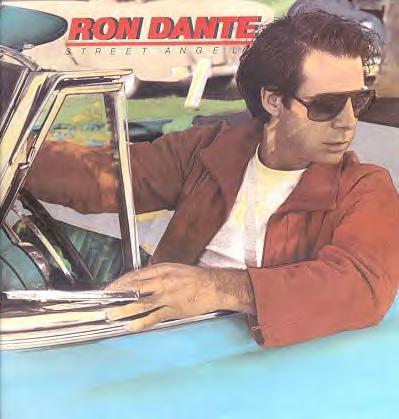
LP: Your first solo
album ("Ron Dante Brings You Up") was released in 1970. You then had the Dante's Inferno LP in 1979 and "Street Angel" [co-produced with Paul Shaffer] in 1981. You were Manilow's producer from 1973 until the early 80's.
What occupied most of your time between the mid-80's until the release of your CD "Favorites" in 1999?
RD: From the mid 80's
until my "Favorites" CD was released, I made a move from NYC to LA and set up shop working at Motown in their publishing company
Jobete. I wrote and produced for different TV shows such as The Little Mermaid for Disney, Showtime Cable Comedy series Full
Frontal Comedy and The Comedy Channel. I also took some off time to focus on where I wanted to put my talent.
LP: Which do you like
doing best? Producing, recording, composing, or performing live?
RD: My favorite thing to do is perform followed closely by singing in the studio and producing.
LP:
Times have changed a lot since you started in the business. Back then, there were no camcorders, VCR's, computers, CD burners
(heck, there were no CD's), MP3's, or most significantly, the Internet. How has all this new technology changed the
way in which youngsters wanting a show-business career get their foot in the door? Has it helped or hindered the music profession
in general?
RD: The technology
has added many things to making music but it's still the song and the singer. It is very, very hard to break into the record
business today because there are only a few major companies that control all the access. Also there are not as many original
artists around as there used to be. Many singers copy too closely to their idols and never manage to develop their own personal
stamp.
LP: True enough, but
for truly talented and dedicated young people, I would think that the relative ease with which they can come up with a demo
(or even a finished production) of their work would be very much to their advantage. After all, it would eliminate a lot of
the guesswork on the part of the powers that be; the record company exec is able to hear an approximation of what the singer
will sound like on a completed album. Unlike the 60's and 70's, when the only way you could demonstrate your talent was in
person, usually unaccompanied by anything other than a guitar or piano and your wits, or (hopefully) at a microphone in a
recording studio. Plus, a producer can listen to quite a few demos in the time it would take to audition just one singer.
Isn't it a much more level playing field now?
RD: True, it's easier
to make a listenable CD today but there are so many home CD's being made that the A & R people at the labels still throw
them out by the tons if they don't come in from a reputable source. Often new artists are brought in by known managers, hit
producers and even other artists on the label.
LP: So now I must ask
the age-old question: What does a young person looking to break into the business need to do to realize his goals? Many aspiring
singers have talent, but no contacts. How would you advise such a person who may be reading this to proceed?
RD: I would advise
new talent to know where they want to position their career and do the very best demos of their songs. The best way into labels
is through the production and publishing companies. It's easier to get to see a music publisher than it is to get into a label.
Also talent managers are always looking for their next big artist.

LP: Do you have any
plans to re-record any of the Archies material, both released and unreleased? I think an album under your own name singing
the Archies stuff would be terrific! You may consider this a strong hint.
RD: I might do a CD of just the dances we did on the shows. New and longer versions would be fun to try.
LP: Is there any established
singer or group with whom you havent worked but would love to? As a producer I mean.
RD: I've always wanted to work with The Rolling Stones, Bruce, Barbra and Celine. Hopefully I will have the
opportunity to do it in the future.
LP: Any songwriters
with whom you'd like to collaborate?
RD: I would like to
write with Diane Warren and David Foster.
LP: Would you like
to produce shows in Vegas, or perhaps even put together your own nightclub act?
RD:
I am currently working on an act for Las Vegas with my old friend Andy Kim and hope to have it ready by the summer. [Note--Ron Dante and Andy Kim headlined at the Riviera in Las Vegas on September 6, 2003, and at the Cannery
on May 28, 2005.]
LP: What are your current
projects?
RD: I'm in the
studio with three artists at this time. Danielle VanZyl, a 14 year old from South Africa; Sabrina
is a young Latino girl from Miami who I am producing for the Kirshner label; and I've just signed a young singer/songwriter
from LA named George Romano. All of these should be ready by the fall
for release.
LP: What are your plans
for now and for the future? Which direction do you foresee your career going? More producing, perhaps some new recordings,
touring, television?
RD: In the future I
see myself performing more and running an international music company.
Interview conducted
in February of 2003
Copyright 2003 Laura
Pinto and Ron Dante. This article may not be reproduced in whole or in part without express permission from Ron Dante.
|